

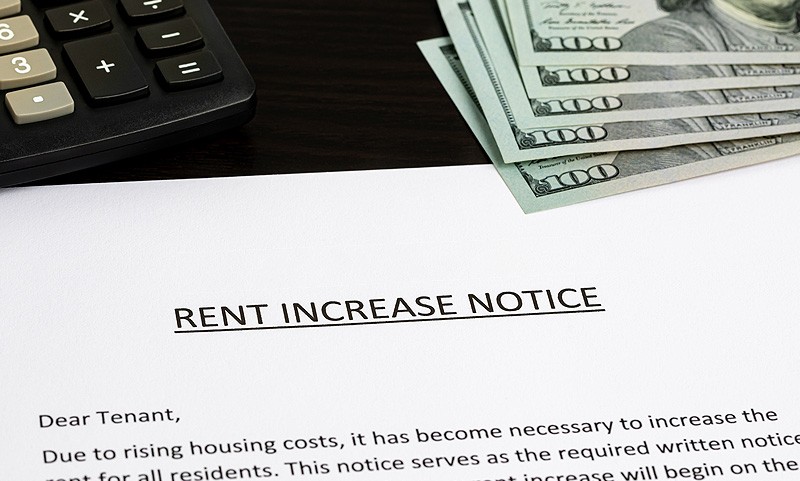
There are many moving parts to being a landlord, and rent increase notices are certainly one of them. Because of this, it’s important to become well-versed in crafting rent increase letters and also know the proper way to deliver them to your tenants. You see, some rental property owners are unaware of the rules of the game, possibly raising the rent above what’s allowed, not including pertinent information in their notices, as well as not informing the renter in the timeframe required by law, and so on. These mishaps can not only delay receiving the higher rent, but can also lead to a costly legal battle.
If you’re not up for taking all this on yourself, the tasks of drafting and sending out rent increase notices can be passed down to a property manager (PM), which I highly recommend. Even so, a landlord should understand the process as well, so I suggest reading through this article to the end. It’s important to be well-informed on the topic because rent increases enable a landlord to reel in the cash flow that keeps pace with inflation and other elements so they don’t end up in the red.
With all that said, let’s get started and uncover more aspects of crafting and delivering a rent increase notice.
Rent Increase Notices and Compliances

First things first, before drafting your rent increase letter and sending it out, you’ll want to ensure you’re aware of and complying with state and local laws, especially with respect to the type of lease you’re dealing with. The two most common are fixed-term and periodic leases. Fixed-term leases are generally year-long but can also be a shorter term of 9, 6, or 3 months, while periodic leases are month-to-month.
Depending upon the lease length, the state the rental resides in, as well as the amount the rent is being raised, the required notification timeframe will be 30 to 60 days. You can find more details about rental compliances in the article I put together – Rental Property Late Fees, Rent Increases, and Lease Terminations.
How Much Should a Landlord Raise the Rent?
Although it would be nice if a landlord could raise the rent based on their financial needs at any given time, there are laws in place to prevent that. Most states only allow for the rent to be raised as a lease ends/begins. When it comes to how much the rent can be increased, that can vary state by state. For instance, California limits rent increases by 5%, plus local CPI (CPI = inflation rate), or 10%, whichever is lower. In contrast, Texas doesn’t impose rent limits, it instead allows the property owner to decide what a reasonable increase would be. This is not surprising because Texas is a landlord-friendly state. If you’re unfamiliar with this term, head over my article – The Five Most Landlord Friendly States for Real Estate Investors.
How Do I Provide a Rent Increase Letter to My Tenant?
Care must be taken in the delivery method of your rent increase notice, and some states may have laws that govern this. That said, be sure to check how your letter must be provided to your tenant. In most cases, email delivery is not the best option because a tenant could miss the email or simply say they never received it. Better options include regular mail, certified mail, as well as hand-delivery. Out of these three, certified mail is the best avenue as it would require the tenant’s signature, which serves as proof of delivery. No matter what path you take, just be sure to check on the legal regulations to be sure you’re complying.
You can look up rental laws by heading over to the following website – once you choose your state, scroll down to view the helpful question and answer section: Landlord-Tenant Laws of the US. Also, to increase the likelihood of staying compliant with the law, I suggest relying on an experienced property manager to handle your rent increase notices, as well as rent reminders when needed, and collection. Additionally, if you don’t want to shell out extra money to hire a PM, dive into my article on the topic of Understanding Property Management Fees and Why They’re Worth the Cost.
You can also watch my video below to get a better idea if bringing on a property manager is for you or not – Is it Worth It to Hire a Property Management Company?
Now that you have a general understanding of some key elements regarding rent increases and informing a tenant of them, let’s focus on what’s included in a rent increase notification letter.
Crafting Effective Rent Increase Letters
Writing the rent increase notice in itself is not too difficult. However, what can be a bit confusing to the average landlord is ensuring they follow state and local laws, as I touched on above. So, before you even begin drafting your letter, do your research on how much you can increase the rent and how often. Along with this, check if there is any specific information that must be included in the rent increase letter, and the rules on how to deliver the notice per state law.
Once these legal logistics are sorted out, if you’re drafting the rent increase notice yourself, you’ll want to become familiar with doing so by reading over the following tips.
First, you’ll want to ensure all the basics are included in the notice, and this would be anything the law requires you to include, along with:
- The date the letter was drafted or mailed
- Landlord name and contact details
- Tenant name
- Rental property address
- Existing lease expiration or renewal date
- The rental rate currently paid
- New rental rate
- Date new rate will begin
- Acceptance or rejection instructions
- Landlord or property manager’s signature
Although rent increases are typical and expected, especially end-of-lease increases, some landlords prefer to list a brief reason why the rent is rising, and these might include:
- Keeping pace with inflation
- Rising utility costs
- Increased property taxes
- Renovations or new amenities that justify a higher rent.
Using a Rent Increase Notice Template
To make things more simple, you can find a rent increase notice template document online and use that as your guide. I suggest trying out eforms.com to create your letter by downloading their rent increase form. Also, here’s a rent increase letter sample by eforms that you can quickly view, and also see an example of the acceptance/rejection instructions I mentioned.
It’s important to realize that you shouldn’t just blindly fill out these forms, assuming that just because it’s labeled something like “rent increase notice template California,” it automatically meets all legal requirements or applies to your specific situation for your rental located in that state.
Now that you have all the information needed to create your rent increase notice, let’s briefly touch on issues that may arise from the letter.
Addressing Tenant Concerns and Negotiations
Don’t be surprised if one of your tenants tries to refuse, debate, or even negotiate the rental rate increase. If this happens, don’t be discouraged or bullied into keeping your rates the same or not as high. As a landlord, you have the right to raise the rent, and as long as you comply with the law, the tenant has to honor your rent increase or move. If a renter tries to negotiate, it’s up to you if you would like to help them out by lowering your proposed rent increase, but you certainly don’t have to.
To avoid situations where the renter is taken by surprise and debates the increase, many landlords will place details in their lease that state there will be a rent increase each year of 3-5%. When this information is included in the lease, it covers the landlord if the tenant tries to take them to court for raising the rent.
As you can see, there’s a lot more to raising the rent on your property than simply filling out a rent increase notice and sending it on its way. With that in mind, as mentioned, you’ll want to consider using a property management company that can take care of drafting up and sending out rent increase letters for you each year. You can head over to my article, The Ultimate Guide to Residential Property Management, to find out more about how valuable their services are.
Rental Rate Increases Ensure Profitability Stays on Track
If you manage your rentals yourself and feel a bit uncomfortable informing your tenants that the rent will increase, try to remember that it’s not personal, you’re running a business. Rent increases are essential to keeping profits on an upward trajectory. When it comes down to it, the cost of everything is rising and rental rates are no exception. Also, just remember that with the proper rent increase notice in hand, you shouldn’t have any issues raising your rent each year.
Our full-service investment company builds new construction rental properties in lucrative locations, and our properties typically yield 18+ IRR. On top of this, we place a fully-vetted tenant in each rental and assign an experienced property manager for you.
If you’re interested in adding an additional cash flowing rental property to your portfolio, feel free to contact us. We would love to discuss your investment goals and help you get on the path to building wealth through rental real estate.
In the meantime, dive into the following video that covers How to Find Tenants for Your Rental Properties: