

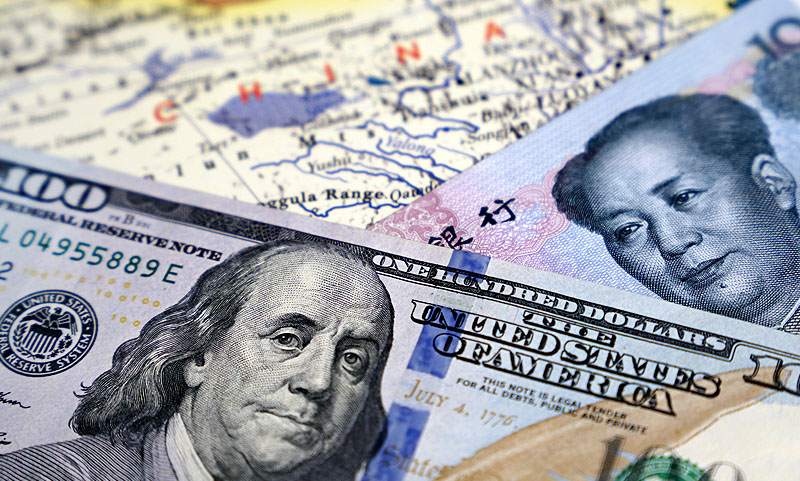
The economy has been on shaky ground, more so than usual, after the Trump Administration raised tariff rates to a level not seen in nearly 90 years. Tariff rate cuts were not on the horizon at this point, and their impact has been far-reaching, hitting Wall Street, influencing the Fed’s considerations for the benchmark interest rate, as well as the stability of U.S. businesses that rely on China for products and manufacturing.
The turbulent trade war has also instilled fear, mainly through the media, into the American population that prices of goods and services will become unmanageable. Even so, a more favorable economic outlook has emerged just recently, stemming from the U.S.-China trade talks that took place in Switzerland this past weekend. The meeting, which many are viewing as a relationship “reset” between the U.S. and China, effectively placed the American economy on a steadier economic path, or so it appears.
The talks between the two countries resulted in tariff rates being drastically reduced, temporarily lowered for 90 days. Tariffs placed on Chinese goods were cut from 145% to 30%, and China agreed to reduce its levies on U.S. products from 125% to 10%.
Although a more favorable economic outlook has been projected following this tariff war de-escalation, the reality of it all is that trade wars typically turn into currency wars. So, what the American population really should be concerned about is where the value of the U.S. dollar is headed, not how much food, clothing, and other goods are priced.
Breaking Ground on Trade Relations Between Two Leading Global Economies
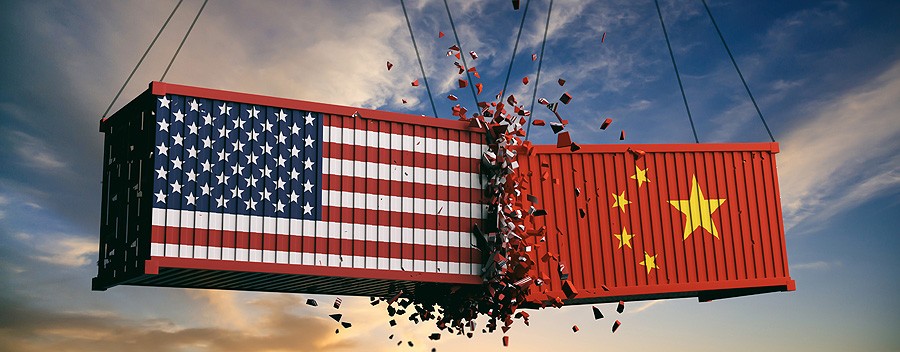
Trump boasted that the recent trade talks between China and the United States were a “total reset” and a good deal. Additionally, Treasury Secretary Scott Bessent stated that the U.S. was aiming for “a long-lasting and durable trade deal” between the U.S. and China. Indeed, this is a step in the right direction, and the meeting ended on a positive note by the two powerhouses calling a truce, so to speak.
“It’s important to understand how quickly we were able to come to agreement, which reflects that perhaps the differences were not so large as maybe thought. That being said, there was a lot of groundwork that went into these two days. Just remember why we’re here in the first place — the United States has a massive $1.2 trillion trade deficit, so the President declared a national emergency and imposed tariffs,” explains U.S. Trade Representative Ambassador Jamieson Greer.
In an attempt to reach the Administration’s goal of tackling the trade deficit and evening the playing field for American workers and producers, reciprocal tariffs were effectively put in place. In addition to the cuts, China terminated other measures, such as restrictions on mineral exports to the U.S. that were introduced during the height of the dispute. However, the United States upheld an additional 20% tariff component aimed at pressuring Beijing to take more decisive measures against the illegal fentanyl trade.
Related Article: Global De-Dollarization Intensifies Signaling Economic Devastation on the Horizon for U.S. Citizens
The Real Threat – A Trade War Turning into a Currency War
Although things are looking up now that a substantial number of countries have come to the negotiating table, and China and the U.S. came to an agreement that works for both sides, we’re still not out of the woods.
The tariff hike pause is set for a 90-day window, but what can we expect after this three-month cooling-off period? Well, since some of the high percentage Liberation Day tariffs have been effectively canceled, tariffs that are put back in place will most likely be at a much smaller scale. It’s predicted that any U.S. tariffs placed on China will be around 54%, with China possibly setting a rate of 34%.
Even if tariff negotiations seem to be under control and the Fed stops referencing the unpredictability of these trade wars, Wall Street settles down, and the American people don’t worry so much, it may just all be a false sense of security. Why is this the case? Because tariff wars can easily turn into currency wars, as they often do. If this happens, and the cards are not played correctly, the U.S. dollar can lose even more value than it already has.
Related Article: The Fight to Stop De-Dollarization and Preserve the U.S. Economy
What exactly is a trade war turned currency war? Well, when slapped with tariffs, countries discreetly start devaluing their currencies as a strategic move to counteract tariffs and enhance their export competitiveness. All countries involved in the tariff war may keep devaluating their own currency to keep up, in what could be viewed as a race to the bottom with destructive economic consequences.
Currency War During the Great Depression
Case in point, during the Great Depression, in the early 1930s, nations like the U.K., the United States, and France deliberately devalued their currencies in an effort to boost the competitiveness of their exports. The impact was devastating as global trade declined by an estimated 60%, driven by a dramatic collapse in imports, which resulted in a severe global economic downturn worse than what was taking place at the onset of this depression era.
On top of the threat of a currency war, the U.S. dollar has been used as a weapon, and nations feel threatened by this, and they are looking for ways to escape the stronghold. In response, countries are liquidating the U.S. dollar and buying up gold. The dollar is down by 27% since the year 2000, if you calculate inflation for each year. Taiwan, Korea, and China hold 2.5 trillion in U.S. treasuries, but that number used to be 4 trillion. Even Japan is starting to sell off the mighty dollar.
Related Article: Fed Pauses Key Interest Rate as Trade War Creates Economic Uncertainty
Are We Making Economic Progress or Headed for a Recession?
Trump has hinted that things will get worse before they can get better, and many are wondering if we are headed for a recession. With countries dumping the dollar, BRICS nations buying up gold, and the threat of a currency war among us, the economic outlook of this country doesn’t look so promising now, even with the positive outcome of the recent U.S.-China trade talks.
Protect Yourself Against Economic Volatility and the Devaluation of the U.S. Dollar
If you have your hard-earned money invested in anything connected to the U.S. government, whether it’s a 401(k), or even a bank account that reduces in value when the dollar decreases, then you’re effectively throwing money out the window.
Just because there were successful negotiations between two global giants recently, doesn’t mean this trade war is over yet, or that it won’t turn into a full-blown currency war. And remember, countries are still liquidating the U.S. dollar, successfully pushing the green back down in value.
Don’t wait around for a positive economic outcome because it may never arrive. Secure your financial future by investing in tangible hard assets that are not connected to anything unstable. Like gold and real estate, for example, they’re smart investment choices and history proves this to be true. While the U.S. dollar, stocks, and millions of retirement accounts tanked over the past four years, real estate and gold have only increased in value.
If investing in real estate makes financial sense to you in this unstable economic environment, book a call with Morris Invest to explore owning a cash flowing rental property. We build new construction homes in lucrative rental markets, as well as help you secure low-interest funding, and we even place a tenant and property manager for you as well. The bottom line is that we make it simple for our clients to add an income-producing property to their portfolio.
In the meantime, to get a little history of the escalation of the current trade war, dive into the video below: